AI As a Thought Partner: 7 Mental Models Most Teams Miss
Use AI as a thought partner—not just a prompt tool. Explore seven mental models to brainstorm better, spot blind spots, and sharpen strategy faster.

Most teams are using AI.
Far fewer teams are actually thinking with it.
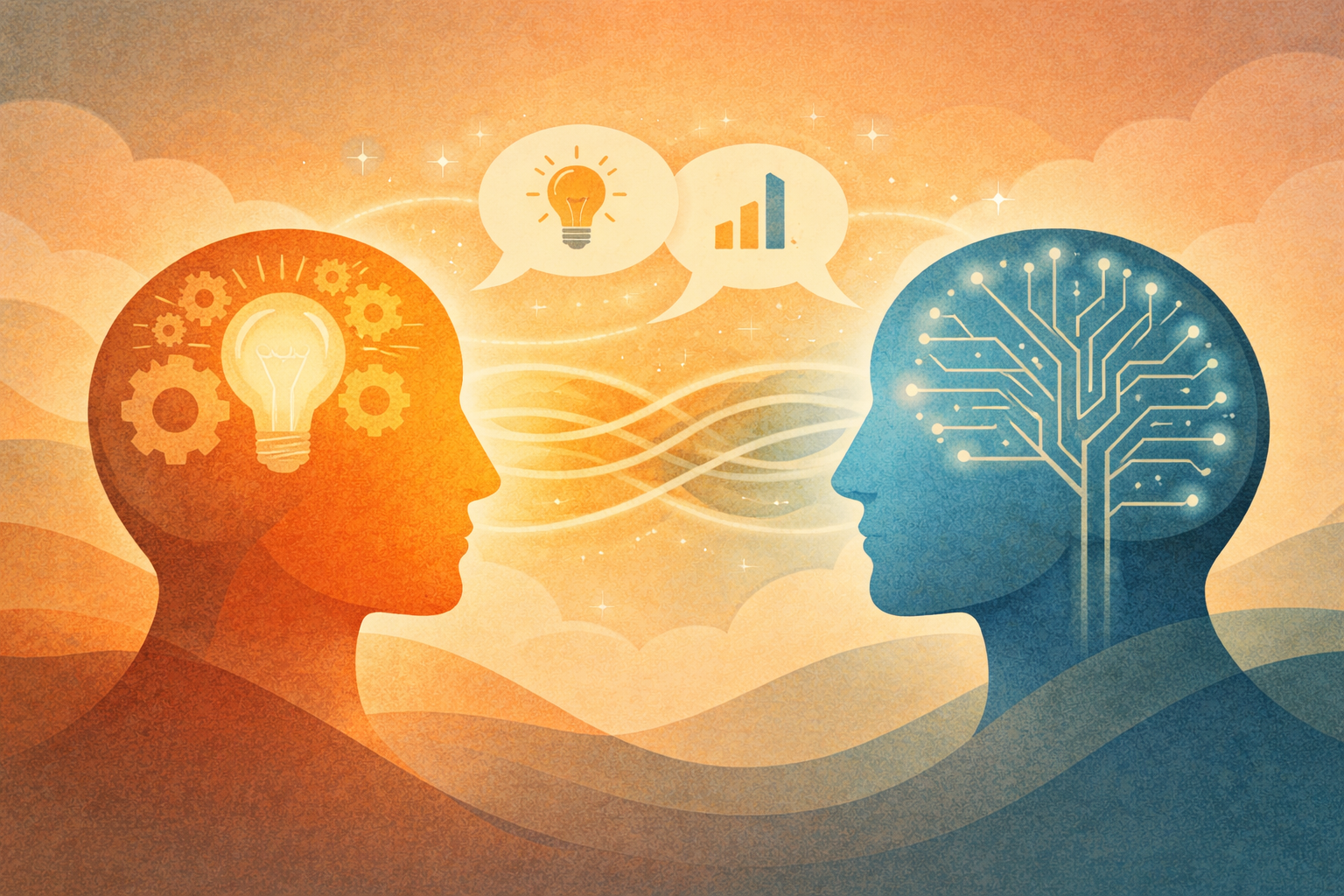
In a recent episode of Prompted, we explored what it means to use AI as a thought partner, not just a tool that responds to prompts. The difference is subtle but powerful. One accelerates execution. The other reshapes how you approach problems altogether.
What follows are seven mental models we covered in the conversation. These aren't tied to a specific agent, framework, or platform. They work whether you're chatting with an LLM, building workflows, or designing fully agentic systems.
1) Idea Generation Without Human Fatigue
Brainstorming is one of the first places people reach for AI, but most stop too early.
Humans hit cognitive fatigue quickly. AI does not. That makes it uniquely suited for sustained idea generation, especially when you intentionally push it beyond obvious answers.
The shift here is not “give me ideas,” but how you ask for them.
Instead of settling for the center of the distribution, you can ask AI to explore the edges. That's often where unexpected and high leverage ideas live.
This mental model is especially useful for:
- Content planning
- Feature ideation
- Campaign concepts
- Naming and positioning work
AI becomes a tireless collaborator that never runs out of creative energy.
2) Structural Support Over Blank Page Syndrome
AI is very good at average structure. That turns out to be a strength, not a weakness.
Most work stalls not because people lack ideas, but because they don't know where to start. Asking AI to create structure first gives you a blueprint before you commit to execution.
This applies to:
- Blog posts
- Strategy documents
- Product requirements
- Internal proposals
- Onboarding flows
Once the structure exists, you can jump into any section and start improving it. AI handles the scaffolding. You focus on judgment and substance.
3) The Critical Friend, Not the Cheerleader
Left alone, most models are overly agreeable.
If you want real value, you need to deliberately position AI as a critical friend. Someone who challenges assumptions and points out gaps before your audience does.
This mental model pairs well with pre-mortems and review cycles. Instead of asking whether something is good, you ask what's wrong with it.
Used well, AI becomes a safe place to surface weaknesses early, when they're easiest to fix.
4) Creative Partner, Not Just Idea Generator
There's a difference between generating ideas and crafting creative assets.
As a creative partner, AI helps develop narrative arcs, emotional framing, and storytelling flow. This is where it assists with turning raw thinking into something consumable.
Examples include:
- Writing narrative hooks
- Translating complex ideas into metaphors
- Shaping tone and emotional resonance
- Creating multiple creative directions for the same concept
You remain the editor. AI accelerates the craft.
5) Strategy Partner That Surfaces Possibilities
AI shouldn't make decisions for you. It can, however, surface patterns, risks, and opportunities you may not immediately see.
As a strategy partner, AI helps you move from raw data or fragmented inputs toward structured thinking. It's particularly effective at:
- Hypothesis generation
- Competitive analysis
- Scenario planning
- Identifying tradeoffs
The key is remembering that AI expands the option space. Humans choose the path.
6) Persona Simulation as a Thinking Tool
One of the most underrated mental models is persona simulation. Instead of asking what a user, buyer, or stakeholder might think, you ask AI to be that person and react in real time.
This works well for:
- Product pitches
- Messaging reviews
- Objection handling
- Stakeholder prep
- Internal alignment
Persona simulation is not a replacement for real user research, but it often gets you most of the way there quickly. It's especially powerful when you feed in context like ICP definitions, prior conversations, or written artifacts.
7) Just Ask What You're Missing
This sounds obvious. Most people still forget to do it. AI is conversational, so treat it that way.
Asking questions like:
- What am I missing?
- What assumptions am I making?
- What data would strengthen this decision?
These sort of open-ended questions often unlock progress when work stalls. This mental model turns AI into a reflective partner that helps you see blind spots you did not know existed.
Across all seven mental models, the pattern is the same.
AI is most powerful when it helps you think better, not just work faster.
Used intentionally, it becomes a collaborator that expands perspective, reduces cognitive load, and accelerates clarity. The teams that unlock this shift aren't prompting more; they're partnering better.
If you're already building agents, these mental models are a strong foundation for designing systems that actually augment human thinking rather than replace it. Leave a comment on the YouTube video where we discuss these mental models in-depth with how you're using any of these (or other) thought partner methods.
Get Started With Agents Now
Browse powerful AI agents or create your own—free, fast, and ready to use today.